



Politics

Featured author

Cristina Marí

They called it the Spanish Revolution

On May 15, 2011 something happened, much…

See all authors

Archive
2013

May (51) April (52) March (56) February (55) January (62) Older

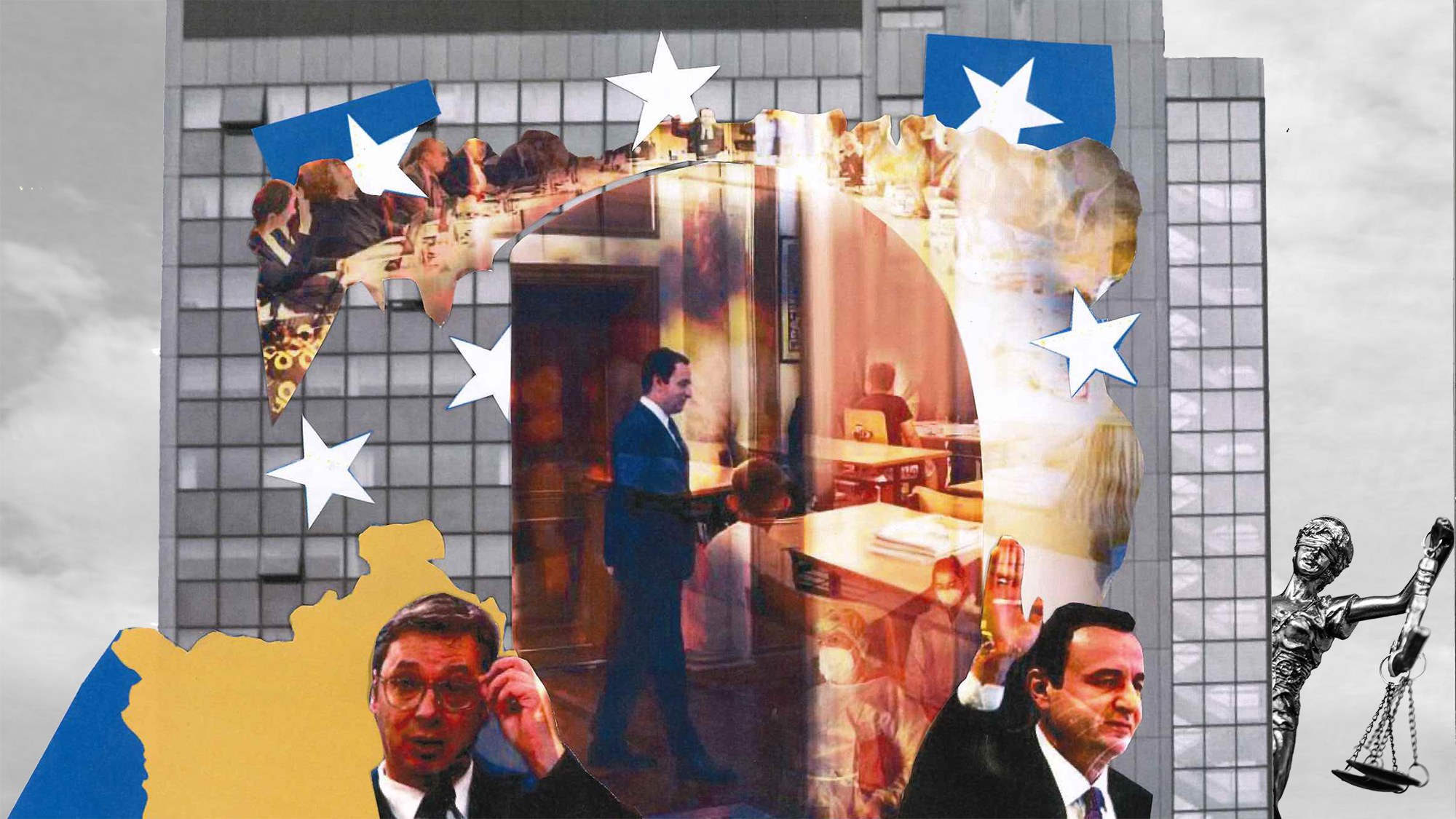
A caricature of the ICO as a policy-maker

By: Andrea Lorenzo Capussela

The West gave Kosovo three things: security, independence and an International Civilian Office (ICO). Led by an International Civilian Representative (ICR) named Pieter, the seven powerful units that compose this office proudly supervise part of Kosovo. I led the economics unit until last March, when I gave myself to studying ICO. The account of my findings will begin with the two-tiered organ through which this institution makes policy, which comprises the ICR, his deputy and two advisors, the chief of staff, and the heads of the seven units. This organ meets every morning. Although less elaborate and tightly regulated, this daily occurrence is reminiscent of the ceremony of the lever du roi. The correspondent of the petit lever is the “kitchen cabinet”, in the course of which après sa levée Pieter converses with his most trusted assistants.

I presume that the ICR is already dressed when he receives them, but I cannot say this with any certainty because I was never invited to this intimate ceremony. I don’t even know where it takes place because the ICO has no kitchens. But I know when it ends, because a few minutes before nine everyone is seated around the oblong table that occupies the vast meeting room at the centre of the second floor. This is the grand lever: at nine o’clock sharp Pieter enters the room in composed but purposeful stride, acknowledges the greetings of the peers of his kingdom, takes his seat at the eastern end of the table, says a few words on what mischief the prime minister was up to the previous day, gives the floor to the person sitting at his left, or at his right, and thus opens the succession of brief allocutions during which he learns what revolts shake the fiefdoms of his vassals and imparts them the necessary instructions.

At first I didn’t know. So, the first thing I did – which would remain the best piece of advice I gave in three years – was to suggest banishing from the proceedings all information of interest to none or only to some, so that the meeting be composed of few dialogues on important topics and not of many monologues on unimportant ones. But my suggestion conflicted with everyone’s desire to shine before Pieter; so, at my turn, I would often say in a casual but deliberate tone that I had nothing to say: this drew surprise and seemed quite an extravagance, but once the initial disorientation was overcome the litanies of monologues rapidly resumed, to Pieter’s evident satisfaction. I inferred that making policy was not the purpose of those meetings, and assumed that policy was made there where I had no access, in the undisclosed kitchen cabinet (what a name, by the way: if one didn’t know, one would think of a cook and two servants talking carrots and artichokes over bubbling pots). The tactic I chose was to shine in the morning meetings, by alternating austere silences with priceless contributions, and thus impose my elevation to the inner circle.

I failed, but my plan made no sense because the US embassy makes policy in its own offices, not in ICO’s. It’s quite simple: the ICO is a loudspeaker. Once someone in the embassy selects a music, by pressing a button, the electric impulse reaches a node (the deputy ICR, always and necessarily a US diplomat), which relays it to a circuit (the ICR) where one microchip (the kitchen cabinet) decomposes it into several streams of different frequency, and another one (the morning meeting) sends these signals to the appropriate parts of the loudspeaker (the units), which emit the corresponding sounds (the policy) in perfect consonance. If the US ambassador is the composer, Pieter is the conductor and we are the orchestra. The deputy ICR is the messenger. Indeed, an early sign of ICO’s decline was the fact that while the previous deputy ICR could read music, and would welcome a discussion on how to play it, the replacement which Washington sent us in 2010 can’t: discussing policy with him is like sitting down with bishop Artemjie trying to persuade him that prince Lazar was indeed of Albanian blood. His function is that of a cable: of a tube, rather, because he has no flexibility.

But it so happens that the music composed in that powerful embassy very seldom contained parts for the severe bassoon, the dangerous horns or the contrabass, the instruments of the dismal topics I dealt with. They sent merrier music: optimistic seas of trumpets, among whose shrill waves you would sometimes hear the clarinet, now affected and quickly shrewd, or the more innocent chirping of a flute. Winds more than strings; hot air, if you will: the kind of music prince Potemkin used to commission for the inauguration of his villages. It never suited my taste: the few times that the score contained also a part for my own section of the orchestra, my resistance was such that they had to transcribe it for more politically-realist instruments and have it played by them.

In short, I lacked influence but I was free. My unit and I could play whatever chamber music we liked, for our minuscule audiences, and once in a while I could persuade Pieter to include our pieces in the program of the symphonic concerts he offered to the broader public. But tubes work in both directions, and so does the deputy-ICR type: as the ICO must play the music it was sent by the embassy, and only that music, the tube must check that too (helped in this by another US diplomat, the sub tube). Exceptions are possible only when the Europeans make a big fuss, when the Americans don’t give a toss, or when the tube or sub tube leak (and you could see from their faces what scolding they would get in these cases). So, I restarted paying attention at the morning meetings, trying to spot passages in the American music around which I could weave my own notes, so that they sounded consonant with the original score but subtly changed it into something I would never have been allowed to write myself. Although I was often unsubtle, I sometimes succeeded (if only Thaci knew, or cared, what some of his laws say!). Until one imprudence sealed my fate: I had changed too much, but the music was played. Once the dust had settled, I presume that the tube – who must have received a super scolding – to play it very safe simply started telling Pieter to always do the opposite of what I suggested. Which may seem excessive but was not a bad strategy: impossible though it may sound, I have almost certainly underestimated our tube.

This and other tactical and strategic errors confined me to irrelevance and turned my unit into a monad. I had again lost interest in the morning meetings. I was often seated in front of Pieter, at the other end of the table, because I was always late and this place was somehow always free: “… Ranilug … the school playground … I’ll talk to the major so that we can take things forward!” is what I would typically hear upon entering the room. Kosovo, ICO and the Ahtisaari plan were all going down the drain, but speakers invariably gave good news, either to follow Pieter’s optimist mood or to cheer him up if he was saddened by something: depending on what kind of irritation prevailed, whether that for the general optimism or that for the boredom of the monologues, at my turn I would either give very bad news or attack the views of the previous speaker, on the flimsiest of pretexts. When I was in better mood I aimed bland jokes at either the tube or the sub tube, who was my favourite target because if the joke was any good, he would detect its venom only after a short interval and would then slowly contract to assume a cavernous pose, retreating his blushed head between the shoulders.

I will try to conclude on a less childish note. ICO never became a group of persons working for a common aim under one leader and with a clear strategy; the causes of this … Oh, I forget: armed with a brush soaked in green paint – green meaning “Mission Accomplished” – the tube would incessantly tour the office politely asking everyone if this or that action of the Matrix (a great work of literature which is published on ICO’s website) could “turn green”: I spotted him talking also with the drivers (transport infrastructure, you know).

The article was originally written in English.
Illustration: Romualdo Faura
The views, opinions and comments published on this BLOG are not necessarily those of the Kosovo 2.0 editorial staff. Also, the website reserves the right to delete, reject, or otherwise remove any views, opinions and comments posted on the blog stories. All comments that incite and encourage hate speech or discrimination will be moderated.

Write a Comment

art