Serbia’s biggest student-led movement one year on
How a fallen canopy revealed the deep cracks running through an entire country.
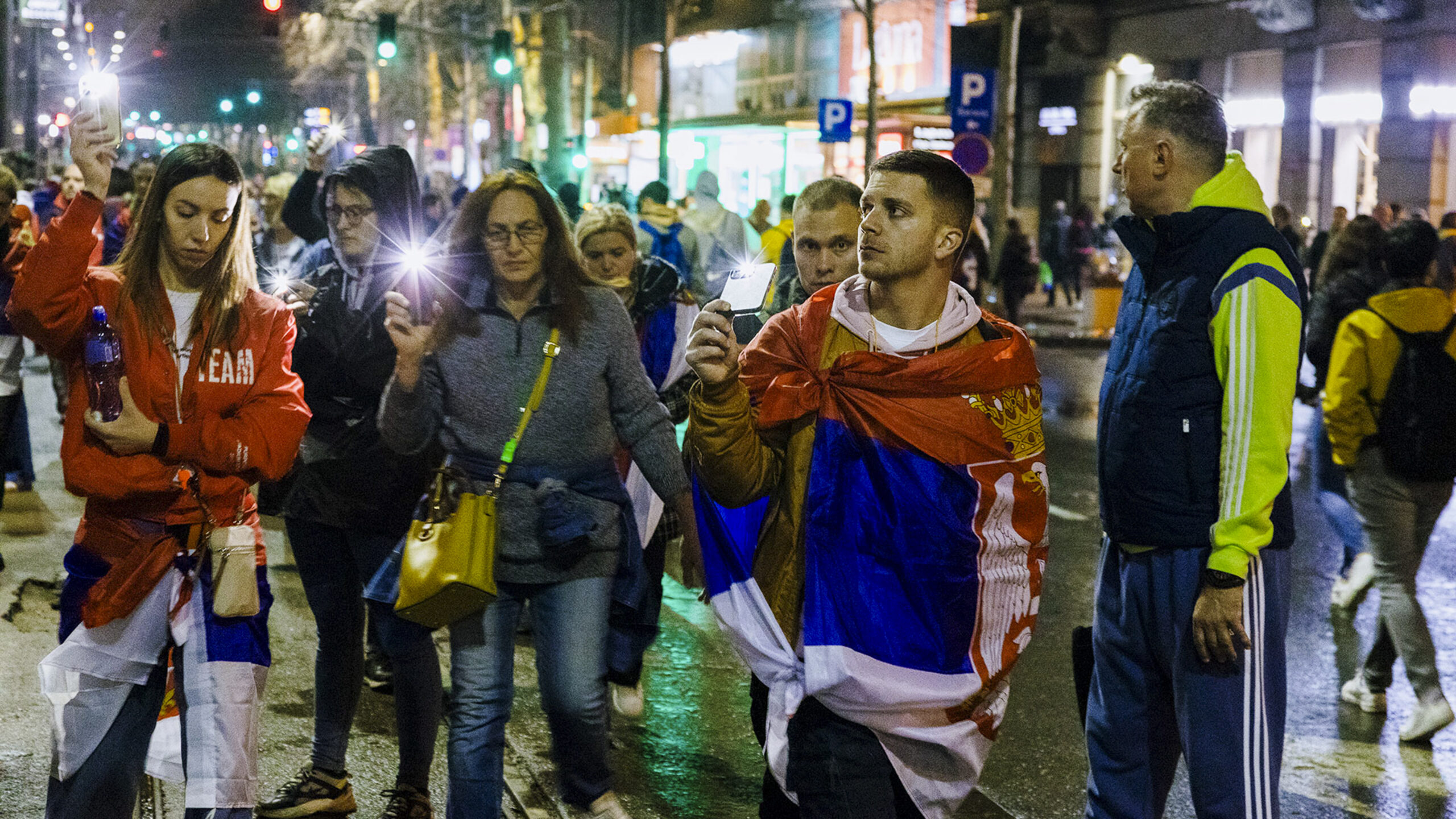
Even when compared to the landmark 1968 student demonstrations — the first mass political protests in socialist Yugoslavia, the current student movement in Serbia is both broader in scope and larger in scale.
Students self-organize through plenums, open assemblies held at each faculty, where everyone has an equal right to speak, propose ideas and vote on decisions.
I cried almost every day watching scenes of solidarity and togetherness — elderly people offering juice and cakes, maybe all they had, to students passing through their village
Women at protests, besides facing physical violence, were also subjected to specific forms of sexualized intimidation.
Within the protests it has not always been safe for all of us, nor has the movement been immune to homophobia, nationalism and nationalist rhetoric.
Nationalist chants at protests — including slurs and shouts telling the police to “Go to Kosovo!” — expose how deeply normalized ethnic hatred remains.
People's views are changed through interaction with their environment and communities. The movement has fostered a process of “relearning how to live together” and how to engage with the “Other,” which is no easy task.
Ivana Jovanović
Ivana Jovanović is a master’s student in International Humanitarian Law and Human Rights Law at the Faculty of Political Sciences, University of Belgrade. She currently works as a project manager at the Media Diversity Institute Western Balkans and has been engaged in peacebuilding and reconciliation efforts with the Youth Initiative for Human Rights in Serbia.
This story was originally written in English.