On freedom and broken wings
How I owned my story and claimed my power.
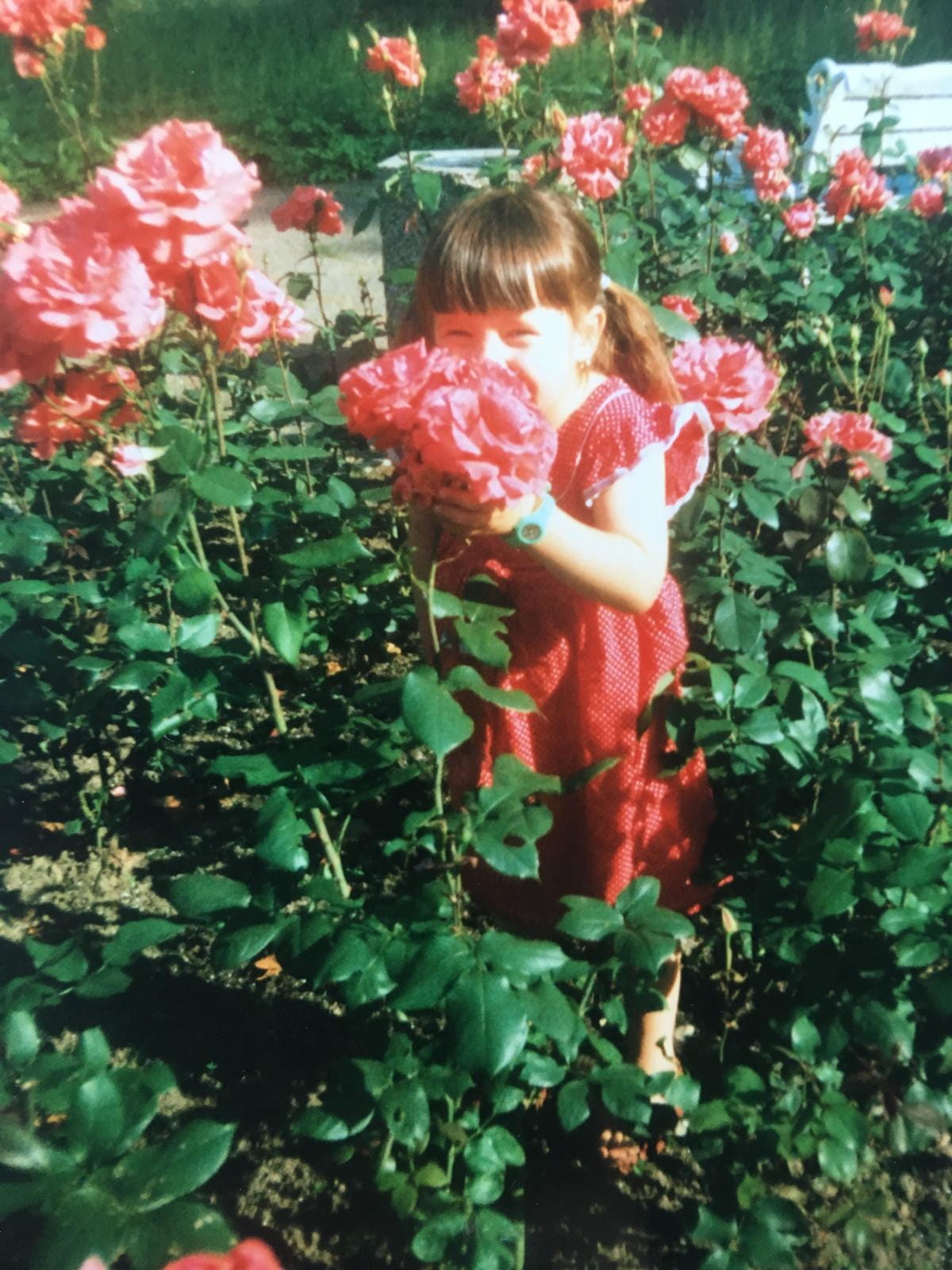
Here I am before the war, at 5 years old. Photo from author's archive.
Being a child from Kosovo, a post-war country, I learned very early in life what human beings are capable of doing to one another for power above all else. Despite the fact that I was lucky enough to experience our war through the safe window of exile, its effects will forever be part of my story, as well as those of my family members and Kosovars around the globe.Political oppression has marked the people of Kosovo for centuries. From the Ottoman Empire through the Yugoslav era, the 1998-99 war in Kosovo to the current neo-imperialism of Western powers — my country of origin has suffered from foreign occupation since long before I was born.
Growing up with parents who never experienced a system that taught them self-inquiry, boundaries or healing made me hustle through life as well.
An immigrant's journey is a leap of faith and requires huge amounts of loss, courage and guilt.
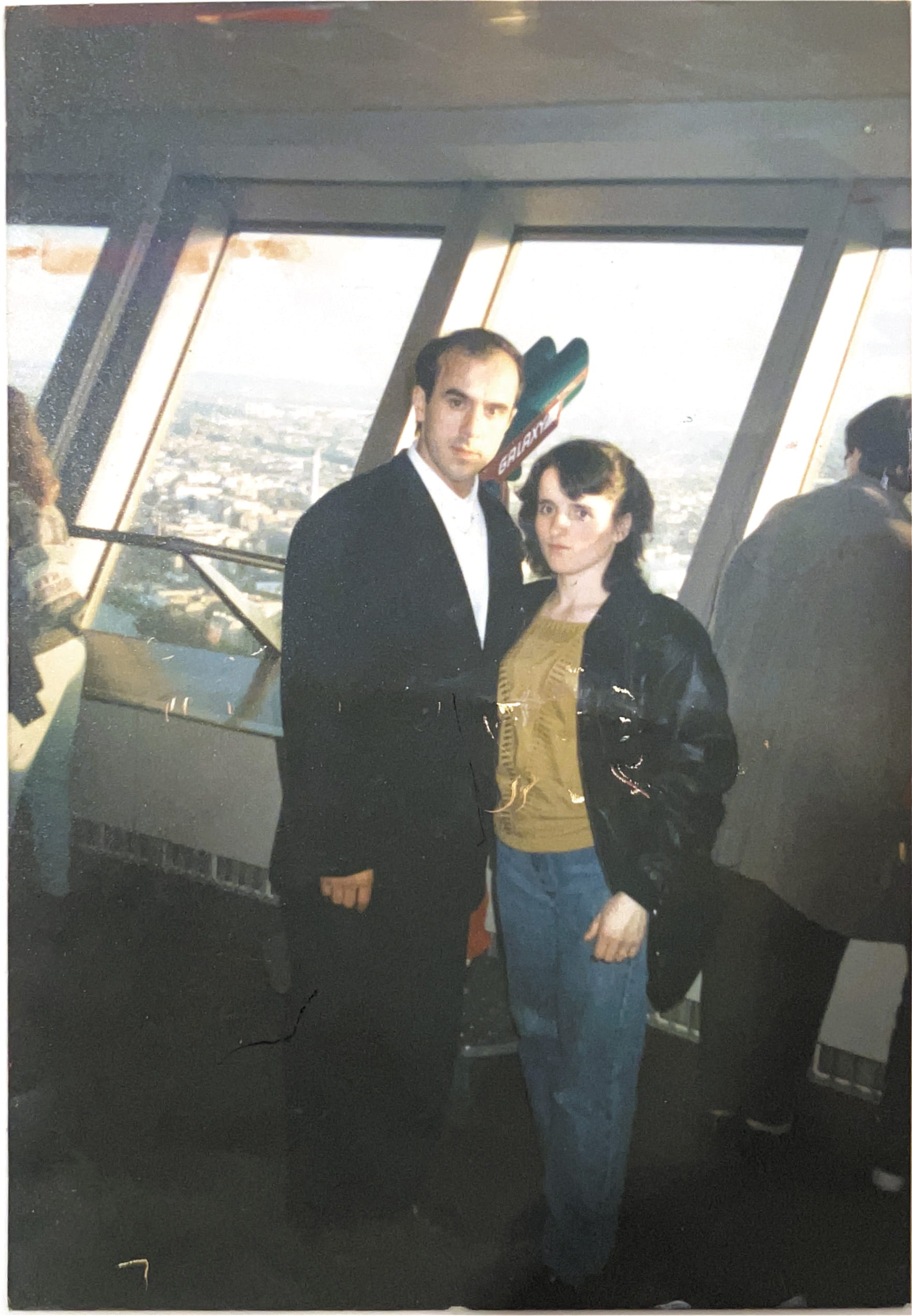
My parents when they first arrived in Berlin. Photo from author's archive.
Fighting and having to defend myself continuously was deeply ingrained in my being. I understood that the roots of my tics didn’t start with me but rather had something to do with descending from a war-torn country, oppression and the ever-working class.
Often, systems of oppression repeat themselves in the structures and dynamics of a family. Political programming influences parenting and childhood more deeply than one would assume. In many families, I observed the father in the role of the dictator, ruler and “god of the house” as we say in Albanian — which to me symbolizes patriarchy in its core.
Meanwhile, we have the mothers, who often appear as either the opposition or the ally. In some families it is the mothers who rule; all depending on the dynamics and hierarchies of power. The children are the people, bearing witness to what the regime teaches. Families are a reflection of the communities, societies and nations they are cultivated in.
Today I find a renewing comfort in my roots, which over time grew into wings.
Making peace with the different parts of me guided me toward a path of ownership, as owning my story and pain was necessary to let go of the suffering and rise from victimhood and trauma.
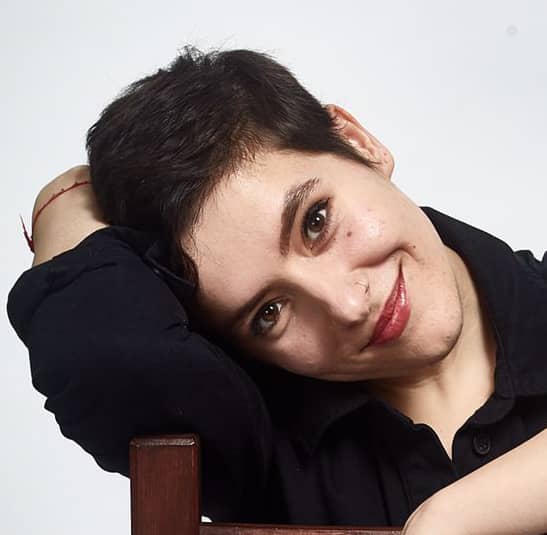
Jehona Jahaj
Jehona Jahaj is a writer, social worker and founder of the diasporic platforms Marrja Zezë and Diaswhora. Born in Prizren and raised in Berlin, she commits her work to cultural diplomacy, transgenerational healing and individual empowerment.
This story was originally written in English.