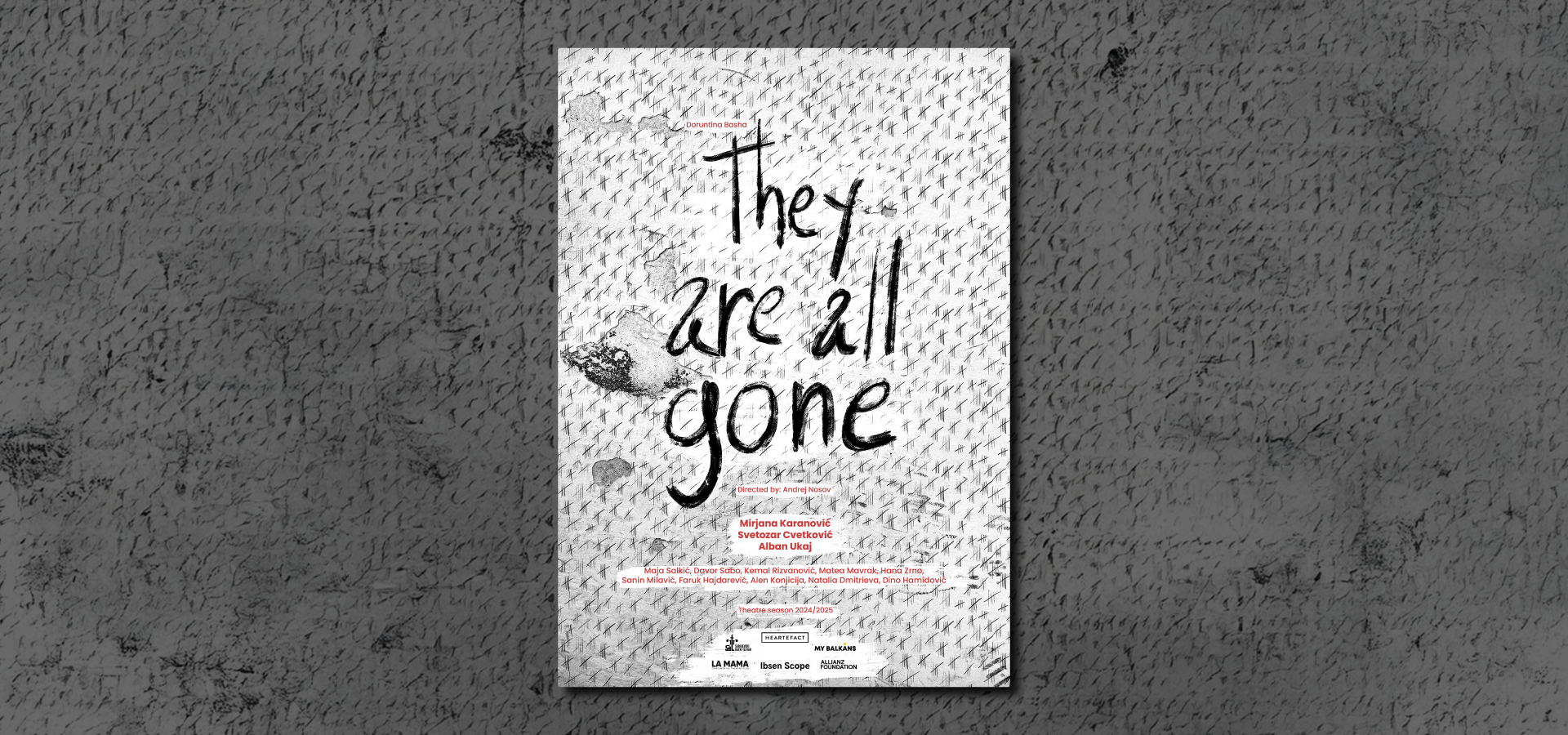
“They Are All Gone” — The unbearable loneliness of those left behind
A stage interpretation exploring the memories and lives of war survivors.
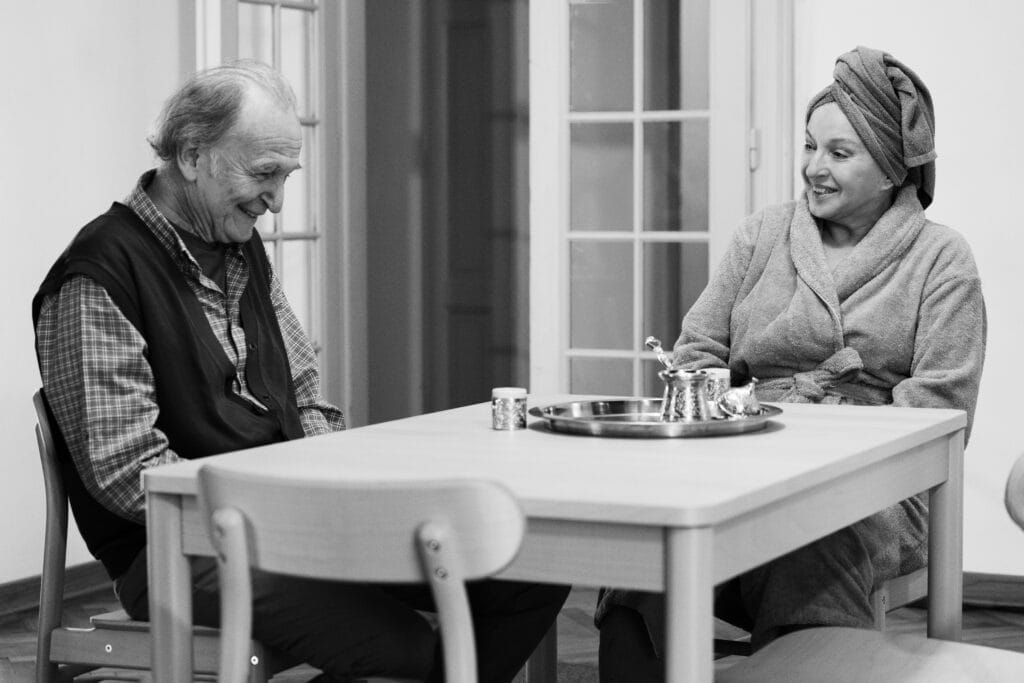
Caption: Photo by Nebojša Babić for Heartefact, still from the play “They Are All Gone”
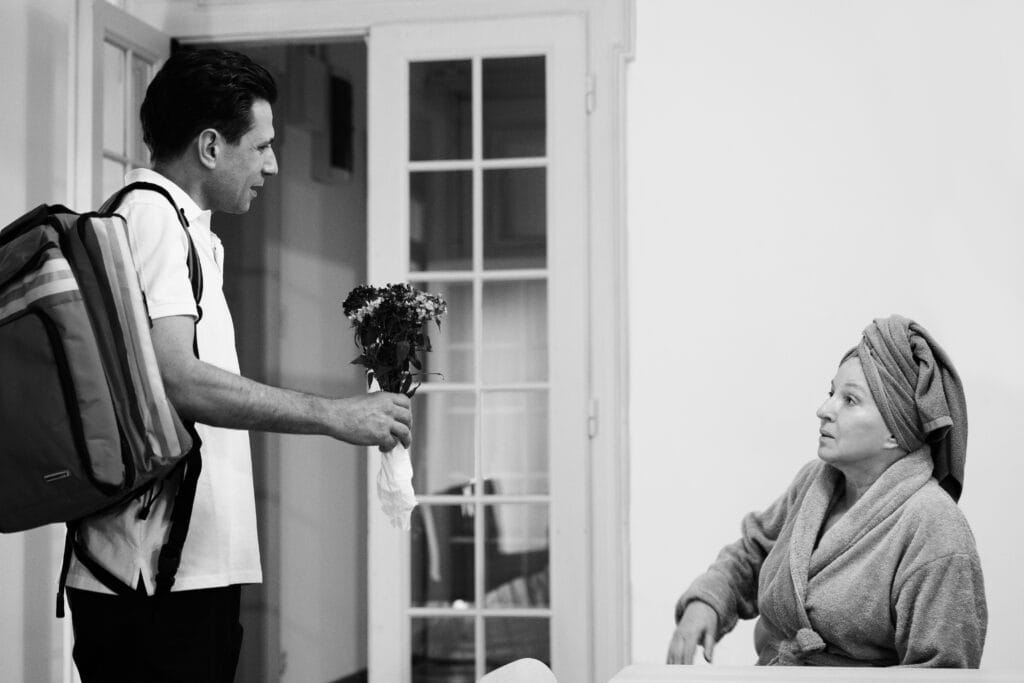
Photo by Nebojša Babić for Heartefact, still from the play “They Are All Gone”
The living room is transformed into a gallery of relics, a private museum curated by longing.
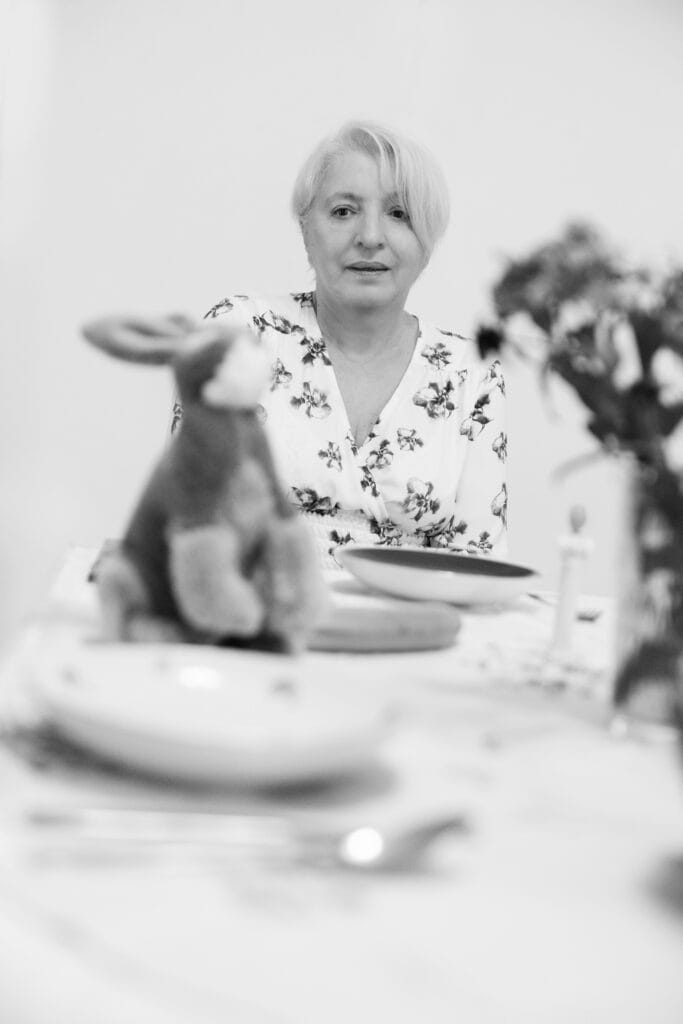
Photo by Nebojša Babić for Heartefact, still from the play “They Are All Gone”
With the arrival of Sadika’s “guests” — her children, grandchildren, and great-grandchildren — the stage is filled with strange feelings of uncertainty and condolence. The children’s voices can only be heard through headphones given to the audience, creating a surreal effect, with sonic disconnections increasing the scene’s ambiguity: Are these presences real? Or are we inside Sadika’s burdened psyche? The characters on stage bring gifts from the past: childhood toys, old school reports, and photographs salvaged with the help of technology. The living room is transformed into a gallery of relics, a private museum curated by longing.
The illusion almost culminates in a moment of bliss — the sounds of children’s voices who are absent and present, shift into a shocking, carefully composed revelation. Sadika is not a mother hosting guests; she is a survivor of the Srebrenica massacre, left alone in a grim, repetitive routine. She inhabits a space between life and death, haunted by what she has experienced. Her past replays endlessly in her mind, turning it into a torture chamber from which there is no escape.
Sadika bathes in ice water because that is how her children died. She drinks water dirtied by soil because it brings her closer to those who have passed.

Dhurata Hoti
Dhurata Hoti is a writer, playwright, and screenwriter from Kosovo. She has written plays, film scripts, short stories, and reviews.
This story was originally written in Albanian.